Ships from our USA and CANADA stock — no extra duties or import fees for US and Canadian customers

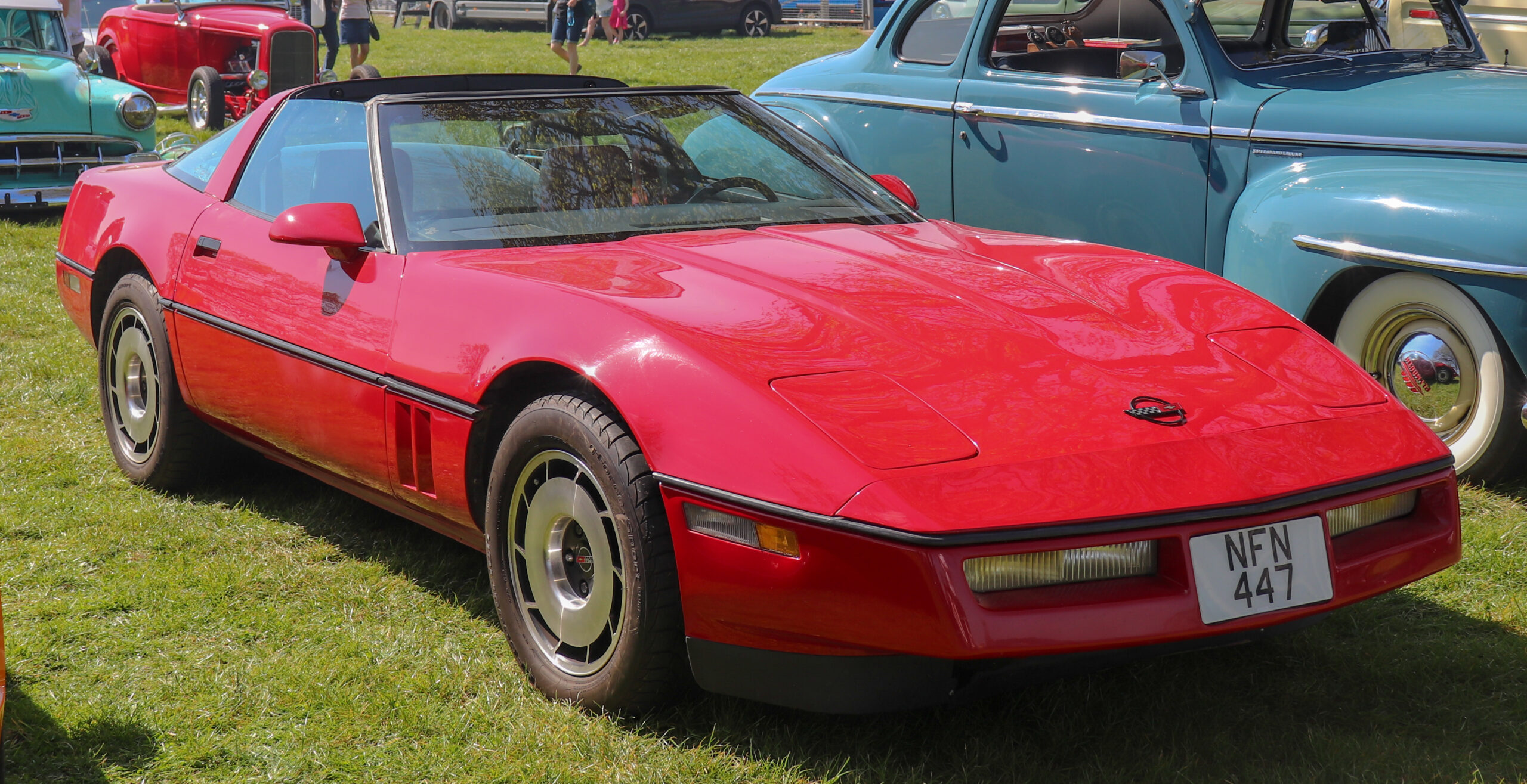
Corvette VATS Delete: The Cars That Came Back, 1982 to 2003
“At this time car won’t start. Starts once in blue moon. Runs great when it starts.“
That is a real sentence, written to us by the owner of a 1986 Corvette. Nine words, and every C3 and C4 owner reading this already knows exactly what it feels like.
Because that is the particular cruelty of this problem. Nothing is wrong with the car. The 5.7 is healthy. The fuel is there, the spark is there, the compression is there. Turn the key and it will fire on starting fluid for a second and a half, which is the engine telling you plainly that it wants to run and something is refusing to let it.
That something is a pellet of resistive plastic in the head of your key, worth a few pennies, wired to a module that has been quietly ageing under your dash since the Reagan administration. It has decided you are stealing your own car.
The Corvette fingerprint
Across the Corvette no-start cases that reach our support desk, the same description arrives again and again, in almost the same words:
- Cranks normally, battery and starter are fine
- Spark is present, fuel pressure is present
- Runs briefly on starting fluid, then dies
- The injectors are not pulsing
- The SECURITY light is intermittent, which is exactly what makes owners chase everything else first
If that is your car, you have already diagnosed it correctly. The security system is holding the injectors down.
Why these years hurt the most
GM put VATS on the Corvette first. Before the trucks, before the sedans, the Corvette got the resistor pellet, because the Corvette was the car worth stealing.
Forty years on, that decision has aged into a problem no amount of care prevents. It does not matter that the car is garaged, waxed, and driven six weekends a year. In fact that makes it worse: the cars that sit are the cars where contacts oxidise, where a pellet wears unevenly against a reader that only sees it occasionally, where a module sits cold for months and is then asked to make a decision.
The owners this hits hardest are the ones who looked after their cars best.
What is actually failing
The system reads a resistance value through your ignition key and compares it against a value it expects. When the two disagree, it shuts down the fuel injectors. That is why the car cranks, has spark, and dies: the security system is not stopping the engine from turning, it is starving it.
The reading drifts for ordinary reasons. A worn pellet. A corroded contact in the lock cylinder. A reader that has made this measurement fifty thousand times. A module quietly failing after four decades. None of it means anything is wrong with your car.
Why the resistor trick does not finish the job
The resistor trick is the first thing every forum thread recommends: read the pellet value in your key, solder in a matching resistor, and the system stops complaining.
On a Corvette it very often produces a specific, maddening half result. The SECURITY light goes out and the car still will not run. Owners tell us exactly this: the resistor matched the key value, the light behaved itself, and the injectors stayed dead.
The reason is simple. A resistor only imitates the key. It does nothing about the module that decides whether the engine is allowed to run, and nothing about wiring and contacts that have aged for forty years. You have quieted the symptom and left the system in charge of your car. Here is the longer explanation of why the resistor trick fails.
On the early cars, the module simply goes
This is the part C3 and early C4 owners tend not to believe the first time they read it. On 1982 to 1989 Corvettes the installation instruction is to unplug the Theft Deterrent Module and leave it unplugged. The PRO Module replaces it.
Not satisfied. Not tricked. Not fooled into behaving. Removed from the car’s decision-making entirely, with nothing left in the circuit to fail again in another ten years.
On the 1990 and 1991 cars the CCM does stay plugged in, but not because the PRO Module is working alongside it. It stays because the CCM also runs the alarm system, and you want to keep that. Once the PRO Module is installed the CCM no longer performs any VATS or PassKey immobiliser function at all. That job is bypassed completely. The CCM is left doing the alarm and nothing else.
It is a one-time install. No subscription, no tuner, no ECM to send away, and nothing to relearn every time the battery goes flat.
Four owners, four ways out
The importer who stopped soldering resistors
John Kucil imported Corvettes into Australia. He had been fixing this the way everyone fixed it, by soldering a resistor into the key wires, one car after another. Then he fitted a PRO Module to a 1988 and wrote back:
“I import Corvettes to Australia and have noticed that this problen is becoming more and more frequent. I used to solder in resisters into the key wires but now only your bypass will be used by me in the future”
He did not stop there. He sent back the entire pin-out for his car so that other owners would not have to work it out alone. Read John’s story.
The 1986 that spent a year in the garage
David’s Corvette had been off the road for twelve months. Not broken. Off the road. He fitted the module, found the right connector after some searching, and sent us this:
“It was terrific!! My corvette it’s alive afer 1 year dealing with the vats system.”
The shop that had been chasing it for weeks
A Vermont workshop had a 1988 on the lift that cranked and would not start, then started fine, then would not. Weeks of it. They fitted the module and opened a support ticket for no reason other than to say thank you:
“After chasing the issue with this vehicle cranking and not starting for several weeks… after installing the bypass module no issues, starts everytime. THANK YOU !!!!”
The one who fitted it before anything went wrong
Jim had no fault at all. His dash was already apart for other work, and he decided he would rather not find out. When he described unplugging the VATS connector he added five words in brackets that sum up this entire page:
“I decided to cut the appropriate wires from the VATS system plug (it wasn’t going to be plugged in again) and solder the wires, wala the car starts.”
Find your car
Every year range has its own wiring guide, with the module location, connector pinouts and the exact splices. All of them are free to read before you buy. Check that the wire colours and pin positions match your car first.
| Years | Module | Where it lives | Guide |
|---|---|---|---|
| 1982 to 1985 | TDM | Under the right side of the dash. On the 1982, behind the seat under the rear hatch, on the left bulkhead | Instructions |
| 1986 to 1989 | TDM (VATS module) | Under the right side of the dash | Instructions |
| 1990 to 1991 | CCM | Under the centre of the dash | Instructions |
| 1992 to 1996 | CCM | Behind the centre of the instrument cluster | Instructions |
| 1997 to 2003 | TDM inside the BCM | Right kick panel | Instructions |
Not certain which system your car has? Identify it from the key, the symptom and the model year.
Why this product exists
NEWROCKIES was not built to sell a gadget. It started with one stranded GM car, one engineer who refused to accept that a working engine could be held hostage by a thirty-year-old anti-theft circuit, and a bypass built over a weekend. That story is here, and removing GM security systems is still the only thing we do.
These cars were built to be driven. Forty years later most of them still can be, and the thing standing in the way is usually the cheapest component in the entire vehicle.
Every module ships with a 30 day money-back guarantee and a lifetime replacement warranty. “If you have a question before you order, ask me, I still answer.” Luke