Ships from our USA and CANADA stock — no extra duties or import fees for US and Canadian customers

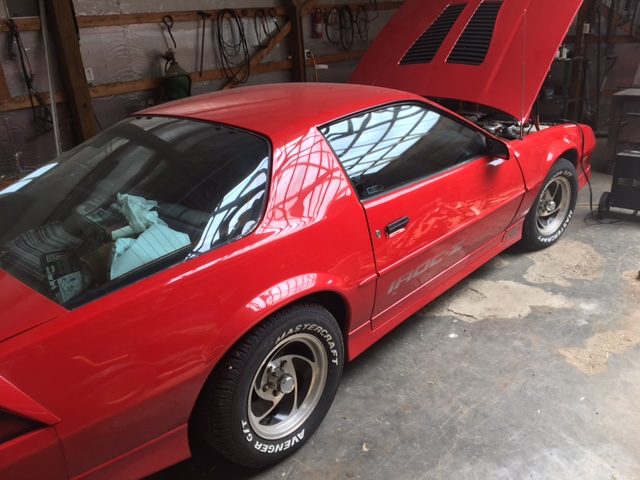
Matthew’s 1989 Camaro IROC No-Start Fix
Twenty nine years. One owner. One hundred and twenty thousand miles. Zero problems.
Matthew’s grandfather bought his Camaro IROC new in 1989 and drove it for the next three decades without it ever letting him down. He was 87 when it finally did.
“My 87 year old grandfather has a 1989 camaro I-roc that he bought new 89. He has put 120,000 miles on the car in the last 29 years with zero issues until 6 months ago it left him stranded at the store.“
Stranded at the store. Not on a track day, not on some epic road trip. Doing the shopping, at 87, in the car he has owned since it was new.
Then six months of nobody knowing why
“The car would sometimes crank once and then not at all after that and sometimes he would get nothing at all. Over the last six months he had taken the car to four different mechanics who could not find the problem.“
Four shops. Six months. And this is not incompetence, it is the nature of the fault. A VATS problem presents as an electrical mystery: sometimes one crank, sometimes nothing, no pattern anybody can pin down, and on the day the car is on the lift it very often behaves perfectly.
There is no failed component to find, because nothing has failed.
Fifteen minutes
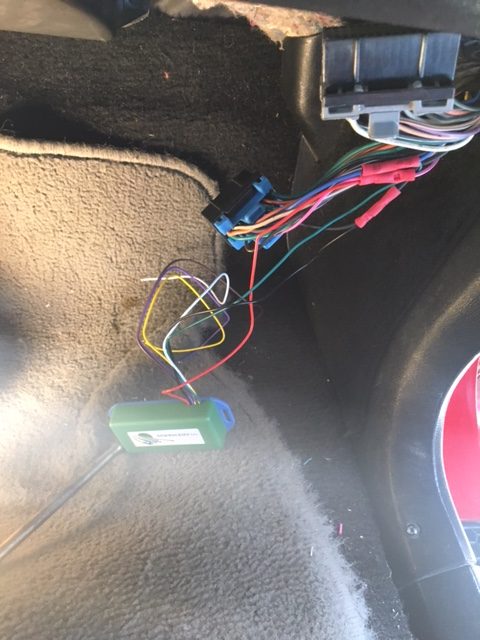
“He told me about the problem and after a little bit of research I came across newrockies. I order the pro module and had it within two days. It took me about 15 minutes to wire it to the ECM and bypass the stater Relay. Now the car starts every time, with zero problems. My grandfather is very grateful, to have his favorite car running again.”
Matthew S.
Six months and four professionals, against two days of shipping and a quarter of an hour with a soldering iron. That is not a comment on the mechanics. It is what happens when you stop looking for a broken part and remove the thing doing the checking instead.
What VATS actually does on these cars
The 1989 Camaro uses the original system, the one GM put on the Corvette first. There is a small resistor pellet moulded into the ignition key, and the car measures it every time you turn the key. If the value it reads does not match the value it expects, it will not let the engine run.
After thirty years, the reading drifts. The pellet wears against the contacts. The contacts oxidise. The wiring ages. None of that is a fault in any ordinary sense, and none of it shows up on a scan tool, which is precisely why four mechanics found nothing.
The intermittency is the tell. A dead component fails and stays failed. A drifting measurement sits near the threshold and falls on one side of it or the other depending on the day, which produces exactly what Matthew described: one crank, then nothing, then nothing at all, then fine.
If you have an 1988 to 1992 Camaro or Firebird
There are two ways to fit it, and Matthew took the ECM route:
- Installation at the ECM, which also handles the theft relay behind the driver’s kick panel. This is what he did in 15 minutes.
- Installation at the TDM, usually on the right side of the dash, if you would rather work there.
Both give the same result. The security system stops being able to decide whether your car is allowed to start.
If your car is from a different year, identify your system here first, or read about the same fault on the C3 and C4 Corvettes that got VATS before anybody else.
To Matthew’s grandfather: 29 years and 120,000 miles in one car is a record most of us will never match. Enjoy the rest of them.
If your GM is doing the same thing, the NEWROCKIES PRO Module is the permanent fix.
Related stories on the blog. Another Camaro, a decade newer: Matt’s 1996, diagnosed over the phone with one question.